
Leaks contribute to unnecessarily high electricity bills
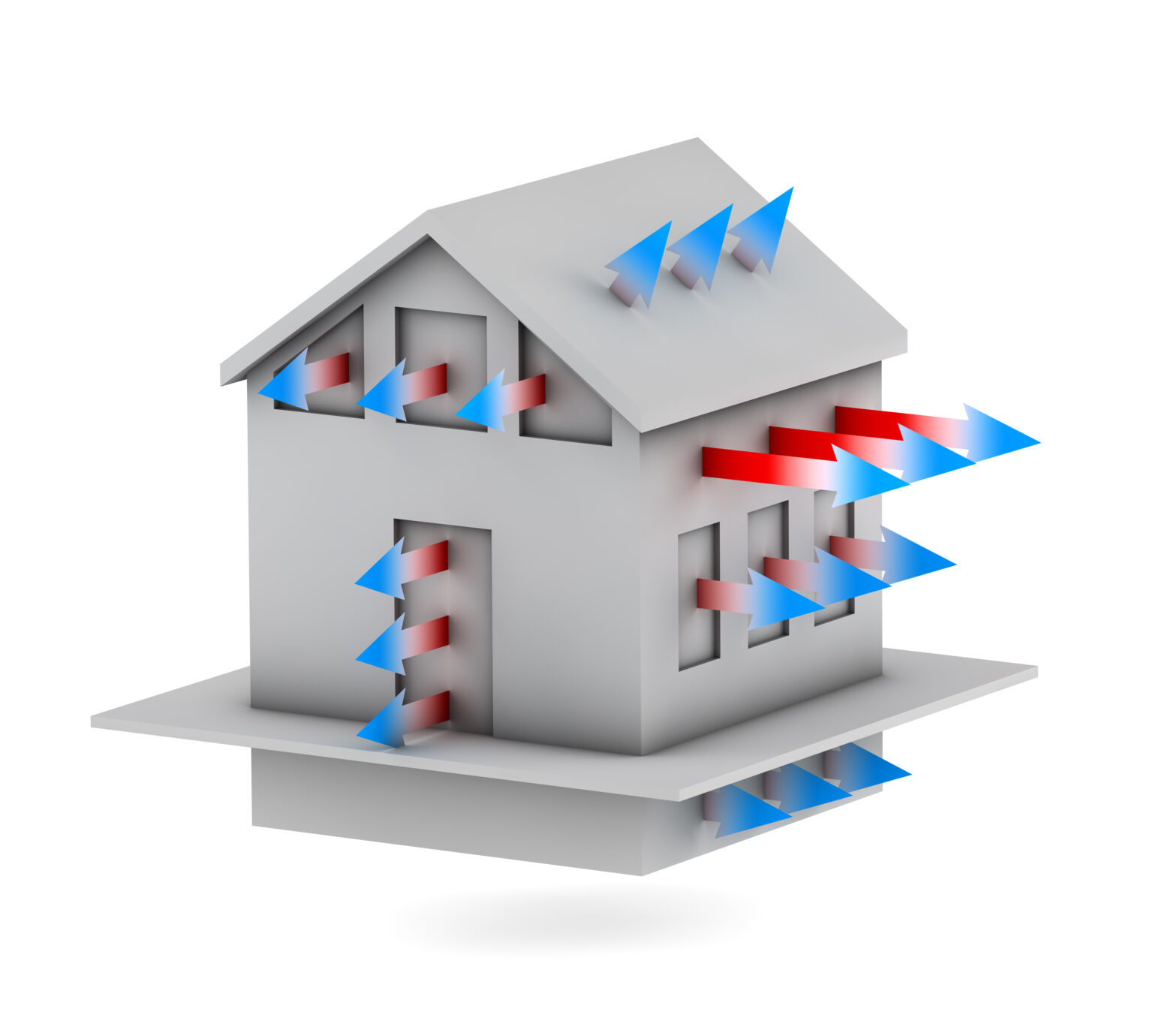
Not firing for the crows has never been more relevant. With electricity prices at record highs, there are several measures that tradespeople can advise customers on to prevent heat loss and improve energy efficiency. But have you checked the joints? It is estimated that approximately 20–25% of a home's energy consumption can be lost through leaks.
The cheapest electricity is the electricity you do not need to produce. Unnecessary heat loss is therefore an important energy-saving measure that can help reduce electricity bills for homeowners. According to the knowledge centre Bolius, it is estimated that approximately 20–25% of a home's energy consumption escapes through leaks. Requirements for energy efficiency have also become stricter under TEK17.
Kenneth Holm Andersen, Development Manager for adhesives and sealants at Dana Lim, believes that leaks are a major problem for homeowners.
"There are many people who are not aware of how important it is to have airtight houses and buildings. Energy loss is a major challenge, and it has never been more relevant to do something about it than now. Leaks in the building structure create air leakage, where cold air seeps in and warm air escapes. The source of leaks is most often found around windows and doors, at roof beams and pipe penetrations, as well as at floor partitions. Heat loss leads to unnecessarily high energy consumption, and in these times, that can amount to a significant cost for a household."
The joints are exposed to movement
Leaks can be found everywhere and vary from one building structure to another. Andersen explains that the cause of leaks is usually movement in the joint.
"Older houses have a higher risk of leaks, but both new and old houses are exposed to climatic conditions that can create movement in the joint. Climatic influences may include temperature changes, sunlight, weather and wind, as well as vibrations in the area. For example, joints on the south-facing side of a house are more exposed to movement and wear due to UV light from the sun compared with the north-facing side."
Andersen adds that movement and wear are typically greatest on the outside of the house, and that dark materials create more movement than light materials because they become warmer. There is therefore a high likelihood that joints will lose their airtightness over time.
Check the joints at least once a year
To minimise heat loss and avoid leaks, Andersen believes that external and internal joints should be checked at least once a year. This is something tradespeople should do in connection with an inspection or a job at the customer's property.
"There are several ways to determine whether the joints are airtight or not. If there are holes and cracks in the joints, or if the sealant has detached on one side, this is an indication that it is no longer airtight. By gently pressing on the joint, you can feel whether it is still adhering to the sides. It is more difficult to check internal joints because they may be hidden behind panels, etc. Thermography and airtightness testing can therefore reveal unwanted leaks and show where heat is escaping from the home."
Andersen continues:
"Homeowners can carry out minor repairs themselves by cutting away the damaged section of sealant. It is important to clean the surface before applying a new sealant. In the case of larger leaks, we recommend contacting a professional."
It is important to invest in elastic sealant
In addition to checking the joints regularly, Andersen emphasises that it is essential to invest in a sealant that prevents leaks from the start.
"It is important to ensure that the sealant allows for the natural movement of the building. Professional advisers and tradespeople will assess which products are suitable for the task. Dana Lim offers a wide range of sealant products with high insulating properties, designed to accommodate movement," Andersen explains, adding:
"There is always a risk that the joint may crack, but the more elastic the sealant is, the greater the movement the joint can absorb. Investing in a sealant with high elasticity will provide savings in the long run. For example, we offer an indoor interior sealant, Danaseal Interior Hybrid 521, which forms a flexible joint that can absorb movement caused by changes in temperature and moisture."
Andersen believes that tradespeople can achieve a great deal by regularly checking their customers' joints and, not least, making sure that any new holes are sealed. He concludes:
"If pipes or ventilation ducts have been removed from the home, it is important that these holes are closed again. Ensuring airtightness is one of the simplest and most cost-effective things you can do for the customer, as it will reduce heat loss and lower energy consumption."